Sign in. It’s quick, free and it’s up to you.
An account is an optional way to support the work we do. Find out more.
Sign in. It’s quick, free and it’s up to you.
An account is an optional way to support the work we do. Find out more.

THE TV LICENCE fee should be abolished and replaced with Exchequer funding, the Oireachtas’ media committee has officially recommended.
The Journal published yesterday that there was a “detailed discussion” at a meeting with the party leaders, public expenditure minister Paschal Donohoe and the finance minister but no decision was made on what Exchequer funding would look like.
The recommendation does not mean the TV licence fee will certainly be abolished, as that decision is still subject to a report from the Government’s working group on reforming the TV licence fee.
But this model was also recommended by the Future of Media Commission in a report published in 2022 and a more recent report in May from media minister Catherine Martin.
In 2022, the Government chose to retain the licence fee system – despite the Future of Media Commission report.
The top recommendation from committee’s lengthy report and the Minister’s report are likely be a weighted factors over Government when deciding the future funding model of public service broadcasting.
Fianna Fáil TD and Chair of the committee Niamh Smyth said that a multi-annual funding arrangement should also be established and maintained through performance commitments from recipients, such as RTÉ and TG4.
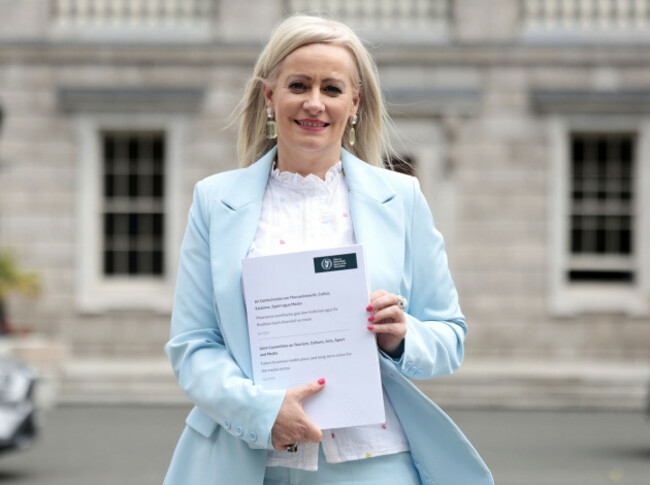
She added, however: “It is important to note that this report’s recommendations are aimed at not only the major public broadcasters, but to local, independent, and community media across all platforms.”
The committee recommends that means tests be carried out on a small percentage of funding levied to public service broadcasters, through a TV Licence fee or otherwise, and the remaining funds be contestable for local, independent and community media outlets.
Coimisiún na Meán, Ireland’s media regulator, will be in charge of the exchequer funding and it is also recommended that it develop codes for public service media content as enshrined in the Equal Status Acts 2000-2018.
This, in theory, will quash attempts from outlets who do not fulfil the definition of public service media in their content from receiving a disproportionate amount of funding.
Separately the committee has recommended that a national Irish-language radio station for young people be established and funded as well.
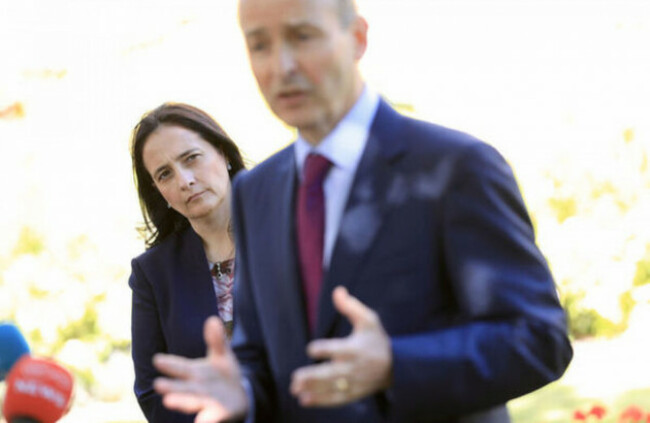
Government ministers are still at loggerheads over the future of the TV licence fee and RTÉ funding.
Martin has been fighting an uphill battle as the idea is being opposed by the Tánaiste, Donohoe and Chambers.
However, Martin’s idea of abolishing the licence fee and replacing it with direct government funding has now been endorsed by the committee.
Additional reporting by Christina Finn

To embed this post, copy the code below on your site













have your say